Prepare for SSS 1 Exam
with EduRev
SSS 1 syllabus


All Courses





















| Why students choose EduRev for their SSS 1 Exam | 4.6  (150K+ ratings) (150K+ ratings) |
 (150K+ ratings)

What is SSS 1 and What Subjects Do Students Study?
SSS 1 (Senior Secondary School 1) is the first year of the senior secondary school level in Nigeria, marking a significant academic transition for students aged 15 to 16. After completing Junior Secondary School (JSS 1-3), students enter the three-year senior secondary phase - SSS 1, SSS 2, and SSS 3 - which ultimately leads to the West African Examinations Council (WAEC) and National Examinations Council (NECO) final assessments.
The curriculum at this level is developed and regulated by the Nigerian Educational Research and Development Council (NERDC) and is structured across core and elective subject groups. Understanding this foundation year is crucial because the concepts introduced in SSS 1 directly shape performance in later classes and high-stakes exams.
| Subject Group | Key SSS 1 Subjects |
|---|---|
| Sciences | Chemistry, Physics, Biology, Mathematics |
| Commercial | Book Keeping, Economics, Commerce |
| Arts & Humanities | Literature, Government, CRS/IRS |
| Technology | Technical Drawing, Computer Studies |
Best Online Courses for SSS 1 Students to Excel Academically
With online learning becoming increasingly accessible, SSS 1 students now have excellent resources to supplement classroom instruction. EduRev offers a well-rounded collection of SSS 1 online courses and skill-building programs that cater to both academic and personal development needs.
Here are some of the best courses for SSS 1 students available on EduRev:
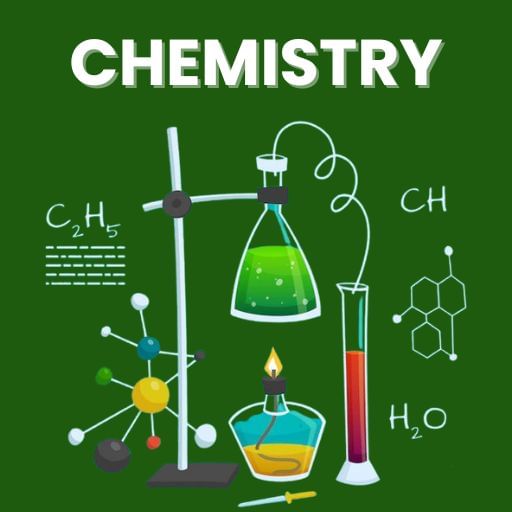
- Chemistry for SSS 1 - covers atomic structure, chemical bonding, and reactions
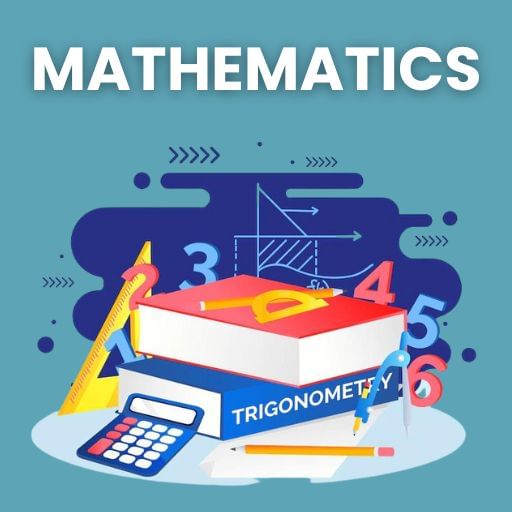
- Mathematics for SSS 1 - aligned with the NERDC-approved SSS 1 syllabus
- Book Keeping for SSS 1 - introduces accounting basics and financial records
- Core Skills - builds foundational academic and thinking abilities
- Multi Skill Foundation - a versatile course supporting overall student growth
These best courses for SSS 1 students provide structured study material, making it easier to prepare thoroughly for school assessments and beyond.
How to Prepare for SSS 1 Chemistry: Key Topics and Study Tips
Chemistry for SSS 1 introduces students to some of the most fundamental concepts in science. Performing well in this subject builds a solid base for SSS 2 and SSS 3, where topics become progressively complex.
Key SSS 1 Chemistry Topics
- Atomic structure and the periodic table
- Chemical bonding (ionic, covalent, metallic)
- States of matter and kinetic theory
- Basic chemical reactions and equations
- Acids, bases, and salts
Study Tips for SSS 1 Chemistry
- Master the periodic table early - it appears across nearly every Chemistry topic
- Use diagrams and models to visualise atomic structures
- Practice balancing chemical equations regularly
- Revisit notes after each class to avoid last-minute cramming
For comprehensive SSS 1 Chemistry notes and topic-wise explanations, explore the best Chemistry course for SSS 1 on EduRev. You can also reinforce abstract concepts through hands-on experiments using the DIY Science Fun: Cool School Projects course, which makes science engaging and memorable.
SSS 1 Mathematics: Core Concepts Every Student Must Master
The Mathematics for SSS 1 curriculum covers a wide range of topics that students must understand thoroughly before progressing to SSS 2. These concepts also form a critical part of future competitive exams like JAMB UTME.
| Topic Area | Concepts Covered |
|---|---|
| Number & Numeration | Number bases, fractions, indices |
| Algebra | Algebraic expressions, equations, factorisation |
| Geometry | Angles, triangles, plane shapes |
| Trigonometry | Basic ratios, sine, cosine, tangent |
| Statistics | Mean, median, mode, data representation |
Regular practice is the single most effective strategy for SSS 1 Maths topics. Strengthen your understanding with the Mathematics for SSS 1 course on EduRev, which offers structured lessons and SSS 1 Maths practice questions aligned with the senior secondary school Mathematics syllabus. Additionally, sharpening logical thinking through activities like the Master Sudoku: From Beginner to Expert course can improve number sense and problem-solving speed.
Book Keeping for SSS 1: Understanding Financial Basics Early
Book Keeping for SSS 1 is part of the commercial subjects stream and gives students an early introduction to how businesses record and manage financial transactions. Understanding these principles now makes Financial Accounting in higher classes significantly easier.
Key Topics in SSS 1 Book Keeping
- Basic accounting principles and concepts
- The double-entry system
- Ledger accounts and journals
- Trial balance preparation
- Simple financial records and statements
Students studying accounting basics for SSS 1 will find the Book Keeping for SSS 1 course on EduRev highly practical and well-structured for building a strong commercial foundation.
Top Digital Skills Courses for Senior Secondary School Students
Academic excellence alone is no longer sufficient in 2025. SSS 1 students who build digital competencies alongside core subjects position themselves far ahead of their peers. EduRev offers several valuable digital skills courses for secondary school students.
- Internet Safety - essential knowledge on cybersecurity, privacy, and responsible online behaviour
- Canva for Everyone: Design Like a Pro - practical design skills for projects and presentations
- Pixel Perfection: Creating & Editing Pictures with Photoshop - introduces professional image editing using Adobe Photoshop
- Amazing Animation Tutorials: Basics to Advanced - a creative introduction to digital animation
- ChatGPT for Everything: How to Use ChatGPT? - helps students use AI tools responsibly and effectively for research and learning
The International Telecommunication Union (ITU) advocates strongly for digital literacy among young learners, and these courses align perfectly with that global direction.
Why Learning C++ Programming and Robotics Gives SSS 1 Students a Competitive Edge
Nigeria's growing emphasis on STEM education makes it the right time for SSS 1 students to begin learning programming and robotics. These skills develop computational thinking, logical reasoning, and problem-solving abilities that are valuable across every career path.
- Start coding with the beginner-friendly C++ Programming for Beginners course on EduRev
- Explore hands-on tech learning through the Robotics Workshop for Kids, which introduces real-world engineering concepts
Learning C++ programming for beginners at secondary school level gives students a head start for university-level computer science and technology careers. Paired with robotics, it forms a powerful STEM skill set that is increasingly recognised by universities and employers alike.
SAT Preparation for Nigerian Secondary School Students: Where to Start
Nigerian students aiming for universities in the United States or other international institutions often need to appear for the SAT (Scholastic Assessment Test), administered by the College Board. As of 2025, the SAT is fully digital, making structured online preparation more effective than ever.
The SAT tests three core areas: Reading, Writing and Language, and Mathematics. Starting preparation during SSS 1 or SSS 2 gives students ample time to build skills gradually without last-minute pressure.
The The Complete SAT Course on EduRev is one of the most comprehensive resources available, covering all tested sections with practice material and strategic tips. It is ideal for students wondering how to prepare for the SAT exam from scratch.
Creative and Skill-Building Courses to Boost Overall Development in SSS 1
Holistic development at SSS 1 goes well beyond textbooks. Creative and supplementary skill-building courses improve cognitive abilities, fine motor skills, and overall confidence - qualities that support academic performance too.
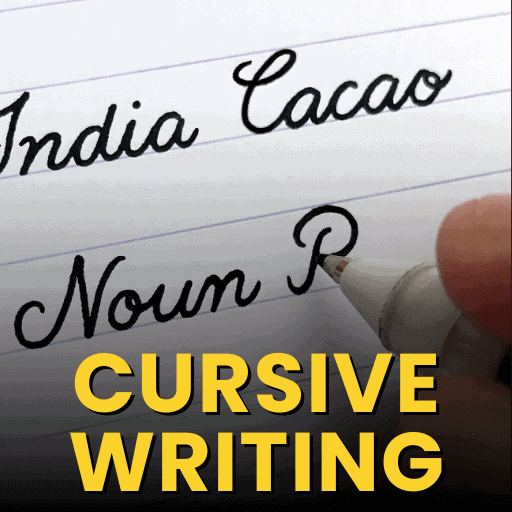
- Cursive Writing Course - Improve Your Handwriting - research shows cursive writing improves reading comprehension and fine motor development
- Cursive Writing for English - a focused course for improving English script
- Cursive Writing - foundational cursive skills for young learners
- Calligraphy Course: Beginner to Advanced - develops precision and creativity
- Piano Tutorials Course: Beginners to Advance - neuroscience research links early piano learning to better mathematical reasoning
- Hands on Art & Craft - stimulates creativity and visual thinking
- Basic Creativity Tutorials - a great starting point for developing creative confidence
- Mahabharat Tales: The Battle of Good and Evil - an engaging storytelling resource for cultural and values education
- Dictionary Words - builds vocabulary for stronger English language performance
How General Knowledge and Current Affairs Help SSS 1 Students Perform Better
Consistent engagement with General Knowledge for secondary school students sharpens awareness, improves communication skills, and helps students perform well in quiz competitions, scholarship examinations, and school debates. It also builds the general comprehension skills that will matter in JAMB UTME during SSS 3.
EduRev offers dedicated resources to build this knowledge base:
- General Knowledge Encyclopedia - a broad, topic-wise knowledge resource for secondary school students
- Daily GK & Current Affairs Tests - regular practice quizzes to stay updated and exam-ready
Making GK and current affairs a daily habit - even spending 15 minutes with these resources - steadily builds the awareness that gives students an edge in competitive situations. Start exploring the General Knowledge Encyclopedia for students on EduRev and take your overall academic preparation to the next level.
SSS 1 FAQs
| 1. What subjects do I need to study for SSS 1? |  |
| 2. How hard is SSS 1 compared to primary school? | |
| 3. What's the best way to prepare for SSS 1 exams? | |
| 4. How many hours should I study every day for SSS 1? | |
| 5. What are the hardest subjects in SSS 1? | |
| 6. How do I score high marks in SSS 1 mathematics? | |
| 7. What study tips actually work for SSS 1 students? | |
| 8. How do I manage time between multiple SSS 1 subjects? | |
| 9. What should I do if I'm failing in SSS 1? | |
| 10. Are there good study materials and resources for SSS 1 online? | |
 One subscription to unlock all SSS 1 Courses View Pricing Plans Starting @ $1 per month | |


